
One of America’s most important military secrets was hidden in plain sight on the edge of the Smoky Mountains
In 1942, the U.S. government quietly built an entire city in Tennessee’s mountains, transforming 59,000 acres of farmland into a massive scientific facility.
75,000 workers lived and worked behind guarded fences, never telling anyone (or even knowing themselves) that they were helping create the world’s first atomic bomb.
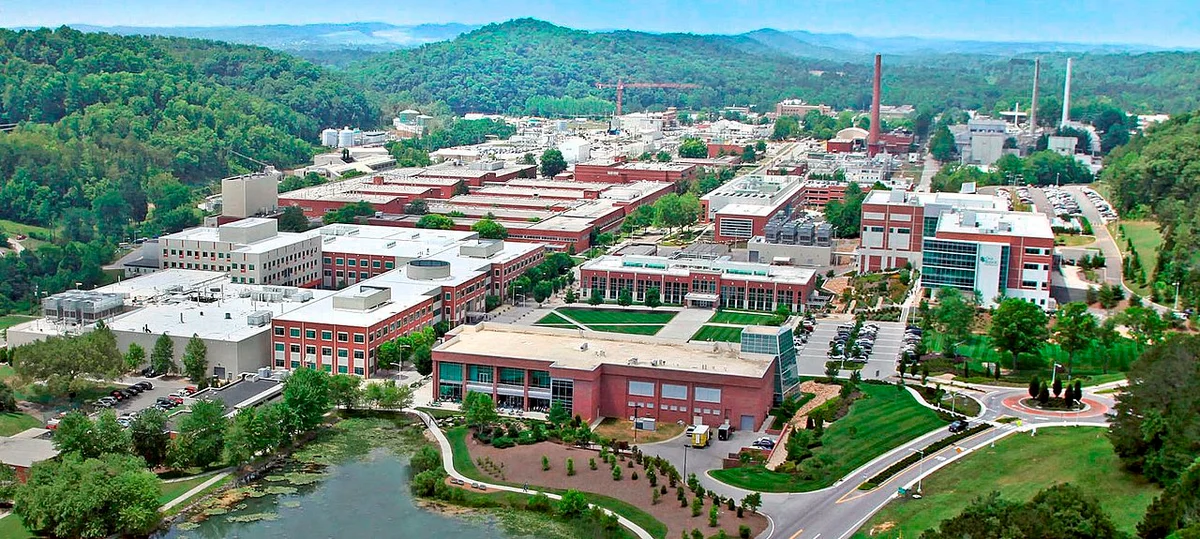
The story of how this secret city operated is even more fascinating.
The Strategic Selection of Oak Ridge’s Location
When General Leslie Groves chose Oak Ridge’s location in September 1942, there were strategic reasons in mind.
The 59,000-acre site along Tennessee’s Clinch River offered natural protection and ideal geographical advantages for a top-secret facility.
The massive project was formally authorized by Roosevelt in December 1942, marking the official start of this monumental undertaking.
You’ll find the location was perfect for several reasons. The hilly terrain and valleys could hide large buildings, while Black Oak Ridge created a natural barrier. The land was also highly affordable at average $48 per acre.
The site’s distance from the coast reduced bombing risks, and the sparse population made it easier to acquire land.
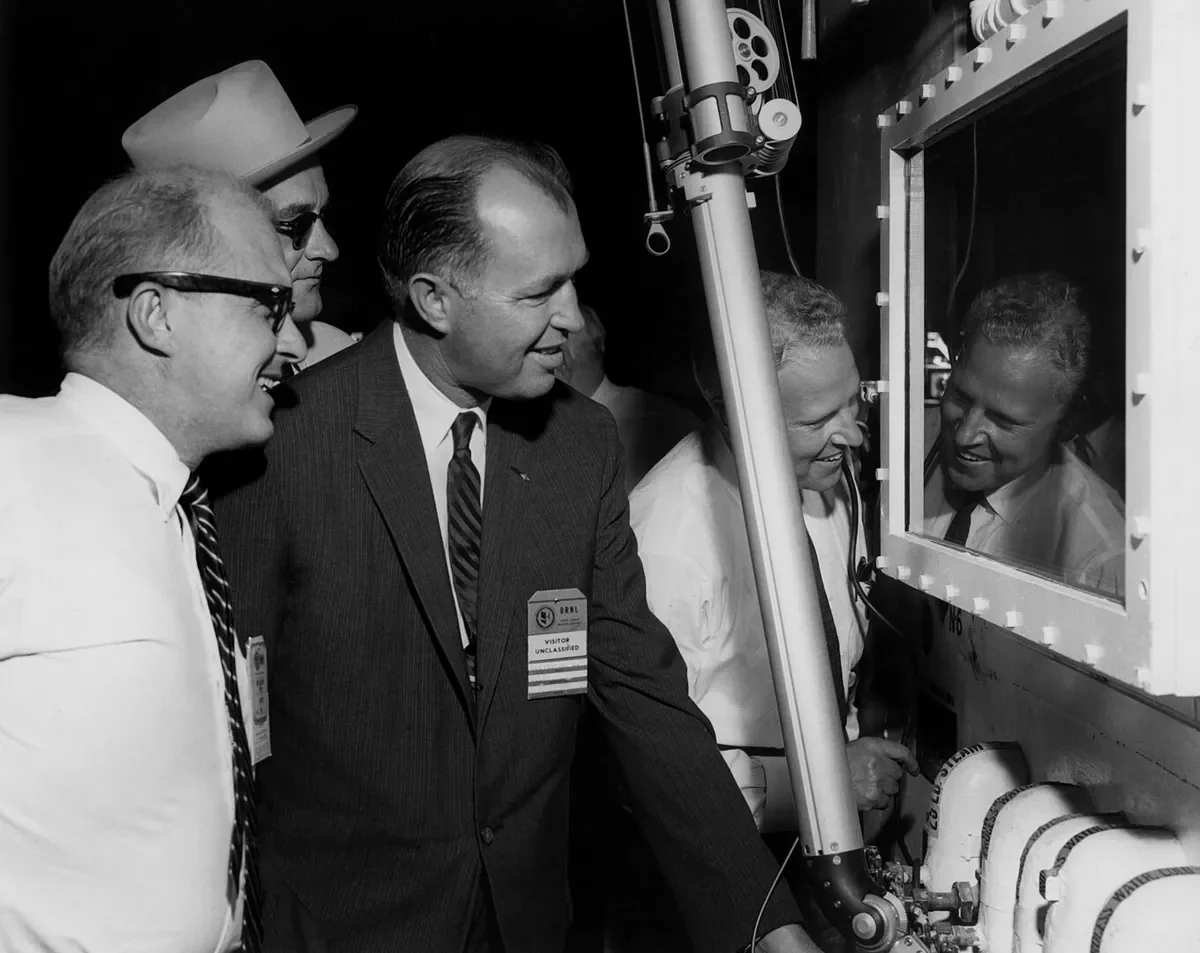
Resource accessibility was exceptional – you’d have abundant electricity from nearby TVA dams, plenty of water from the Clinch River, and a strong workforce from Knoxville just 20 miles away.
With Senator McKellar’s support and multiple transport hubs nearby, Oak Ridge’s location proved ideal for the Manhattan Project‘s needs.
Building a Hidden Metropolis From Scratch
Once the perfect location was secured, the mammoth task of building Oak Ridge began.
You’d be amazed how quickly this hidden infrastructure emerged – within months, crews transformed 59,000 acres of rural land into a bustling city of 75,000 people.
The rapid expansion required innovative solutions. The city’s most significant structures included the massive K-25 Plant with its multiple operational areas.
The project was so secretive that most workers had no idea they were helping create the atomic bomb.
Workers laid 300 miles of roads, installed 100 miles of gas pipes, and built 44,000 housing units.
They used prefabricated materials and cemesto boards for quick assembly, working around the clock to meet deadlines.
Life Behind the Fences: A Growing Wartime Community
Behind the security fences of Oak Ridge, a remarkable wartime community sprang to life. The city’s workforce diversity brought people from across America, though Black workers lived in segregated housing. The city’s dedication to supporting the war drove every aspect of daily operations.
You’d find a bustling community with modern amenities that served its 75,000 residents:
- 10 schools, 7 theaters, and 17 restaurants kept daily life vibrant
- 13 supermarkets and a library with 9,400 books served residents’ needs
- 17 religious denominations offered regular church services
Community dynamics revolved around strict secrecy – workers couldn’t discuss their jobs, even with family. The facility’s primary mission involved uranium enrichment at K-25 for the development of atomic weapons.
Despite security restrictions, you’d find plenty to do in your free time, from bowling to symphony concerts.
The city’s infrastructure included 160 miles of wooden boardwalks connecting neighborhoods, while Army doctors provided healthcare at local hospitals.
The Massive Industrial Complex and Its Mission
The massive industrial facilities at Oak Ridge formed the beating heart of America’s atomic program. You’ll find industrial innovation on an unprecedented scale, with three different uranium enrichment plants operating simultaneously.
The centerpiece was K-25, a U-shaped building covering 44 acres – it was the world’s largest building at the time.
This wartime production complex transformed 59,000 acres of Tennessee farmland into a high-tech powerhouse. The facilities included Y-12 for electromagnetic separation, S-50 for liquid thermal diffusion, and the X-10 pilot reactor.
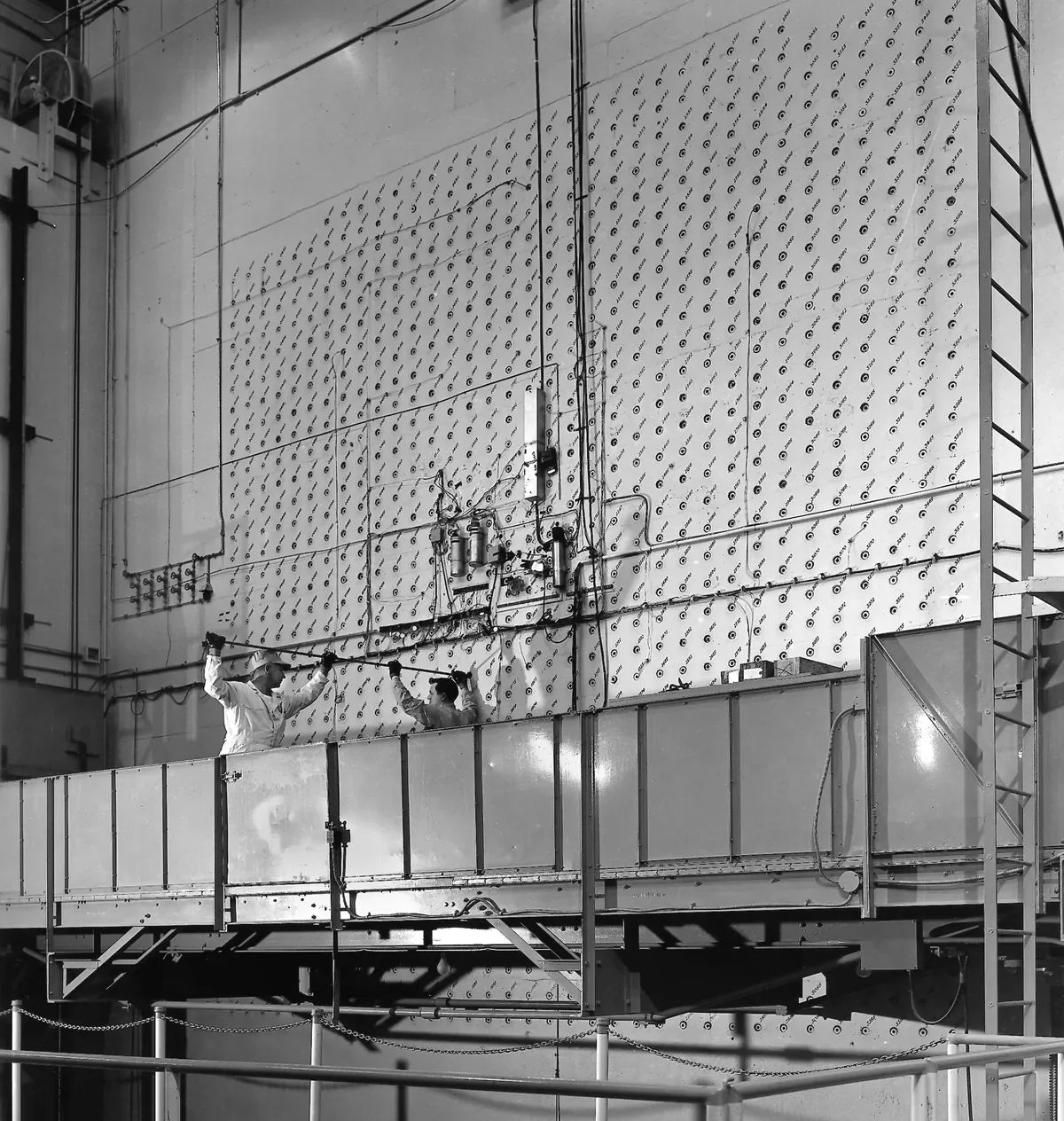
Engineers tackled incredible technical challenges, from developing special coatings to handle corrosive materials to creating advanced leak detection systems.
The price tag? A staggering $512 million for K-25 alone – that’s about $6.5 billion in today’s money.
Security Protocols and Secret Operations
Security at Oak Ridge turned a peaceful Tennessee valley into an impenetrable fortress of secrets.
You wouldn’t believe the intense security measures in place – multiple military checkpoints, tall barbed-wire fences, and constant patrols kept the site locked down tight.
The information secrecy was just as strict. Workers couldn’t tell anyone what they did, not even their families. Mail was censored to prevent any sensitive details from leaving the facility.
The site was under constant watch by CIC agents, who provided protection for top scientists and monitored for potential threats.
Here’s what made Oak Ridge’s security so effective:
- Military police guarded checkpoints 24/7, checking clearances and conducting searches
- Over 400,000 background investigations screened potential employees
- Counter-intelligence agents worked undercover to catch security breaches
If you broke the rules, you’d face serious consequences – immediate dismissal, loss of clearance, or even prison time.
The message was clear: in this secret city, silence meant security.
From Military Control to Civilian Township
After years of strict military control, Oak Ridge’s transformation into a civilian township began taking shape in 1959.
The city’s journey from a secretive military installation to civilian governance marked a significant turning point in its history.
The population peaked at 75,000 in May 1945, with 82,000 people employed at Clinton Engineer Works.
The Manhattan Engineering District was officially established in 1942, leading to Oak Ridge’s rapid development as a critical site for the atomic program.
The community evolution started earlier, when Turner Construction Company took over community facilities administration in 1943.
This laid the groundwork for Oak Ridge’s future as a permanent city rather than a temporary military town.
Today, you can see the results of this change in Oak Ridge’s thriving civilian infrastructure, diverse business community, and its role as both a modern city and a historic Manhattan Project site.
The city now boasts 90 veteran-owned businesses, demonstrating its ongoing strong connection to military service and innovation.
Oak Ridge’s Enduring Nuclear Science Legacy
While Oak Ridge’s military roots shaped its beginning, the city’s scientific legacy continues through groundbreaking research at Oak Ridge National Laboratory. You’ll find nuclear advancements that have transformed science, medicine, and energy production since the 1940s.
Today, ORNL leads scientific collaboration across multiple fields:
- World’s fastest supercomputer, Summit, tackles complex research problems
- Spallation Neutron Source and High Flux Isotope Reactor produce life-saving medical isotopes
- Advanced materials research develops new technologies for clean energy
The lab’s achievements include Nobel Prizes, Enrico Fermi Awards, and countless innovations in nuclear science.
What started as a secret wartime facility has evolved into America’s largest science and energy laboratory, where researchers continue making discoveries that benefit society through improved medicine, sustainable energy, and environmental protection. The facility’s evolution from its origins as part of the Manhattan Project workforce of 30,000 demonstrates its remarkable transformation into a modern research powerhouse.
Conclusion
When you look at Oak Ridge’s legacy today, you’ll see how this secret city transformed American science. From housing 75,000 wartime workers—enough to fill a major sports stadium—to becoming a cornerstone of nuclear research, the site’s impact endures.
You can still visit the preserved facilities where scientists made history, and you’ll find Oak Ridge National Laboratory leading the way in modern energy innovation and scientific discovery.